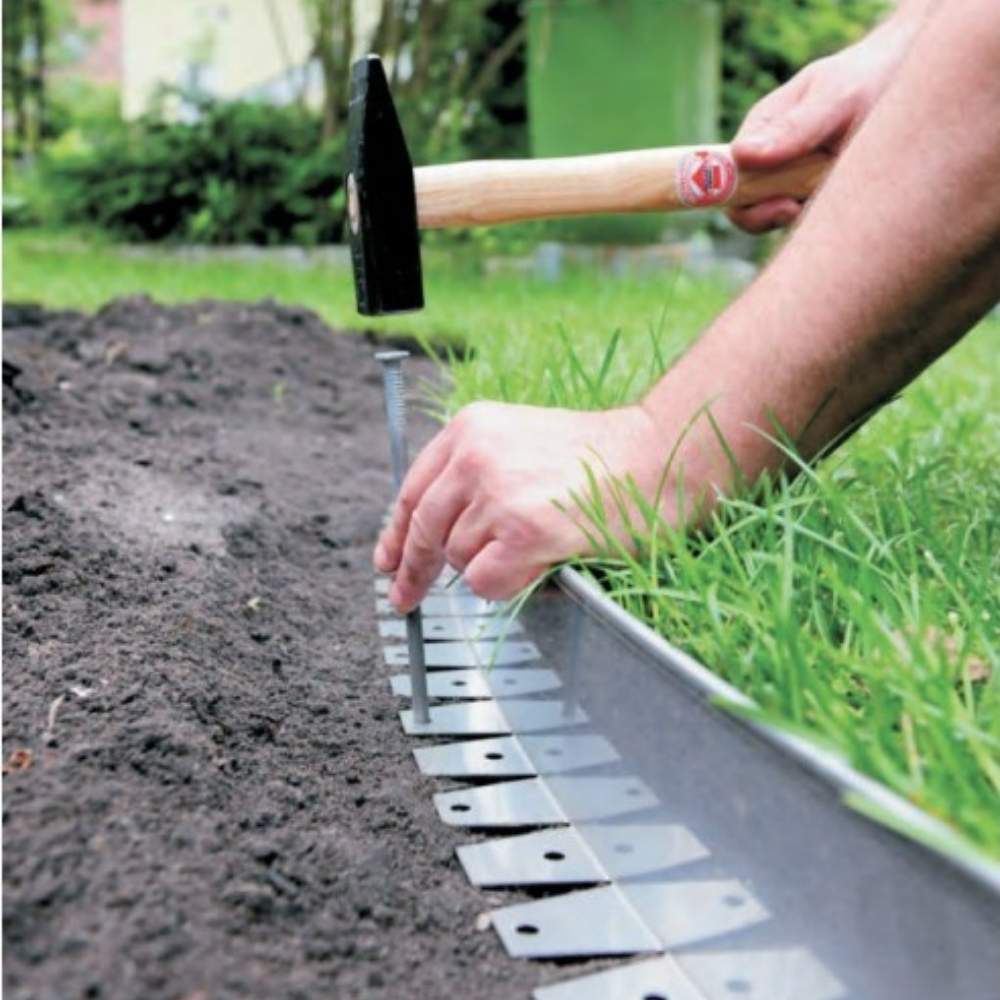
Spikes driven with a mallet against a cut spade line
Suits
Lawn to bed borders, patios, walkways, driveways, gravel areas
Weight
Approximately 1.1 kg per metre in the 50 mm height
Shipping & returns
Tracked delivery anywhere in Europe. It is free on orders of €60 or more, and a flat €22 below that. Allow 5 to 7 days, after a 24 to 48 hour handling time.
Under the Consumer Rights Act 2022 you have 14 days from delivery to cancel for any reason, and a further 14 days to send it back in resaleable condition. We refund the price you paid, including standard delivery. You cover the cost of returning it unless the item is faulty.
If it arrives faulty, damaged or not as described, we put it right at no cost to you under the Consumer Rights Act 2022 and the EU Sale of Goods Directive 2019/771, return postage included.
Rinse mud off with a hose. Surface tea staining can appear in coastal air and wipes off with a stainless cleaner. Do not use wire wool, which leaves iron particles that then rust.
Three Face Heights50 mm, 100 mm and 200 mm for different retaining jobs
Interlocking SectionsOne metre lengths that join into a continuous run
304 StainlessResists corrosion and keeps a bright finish
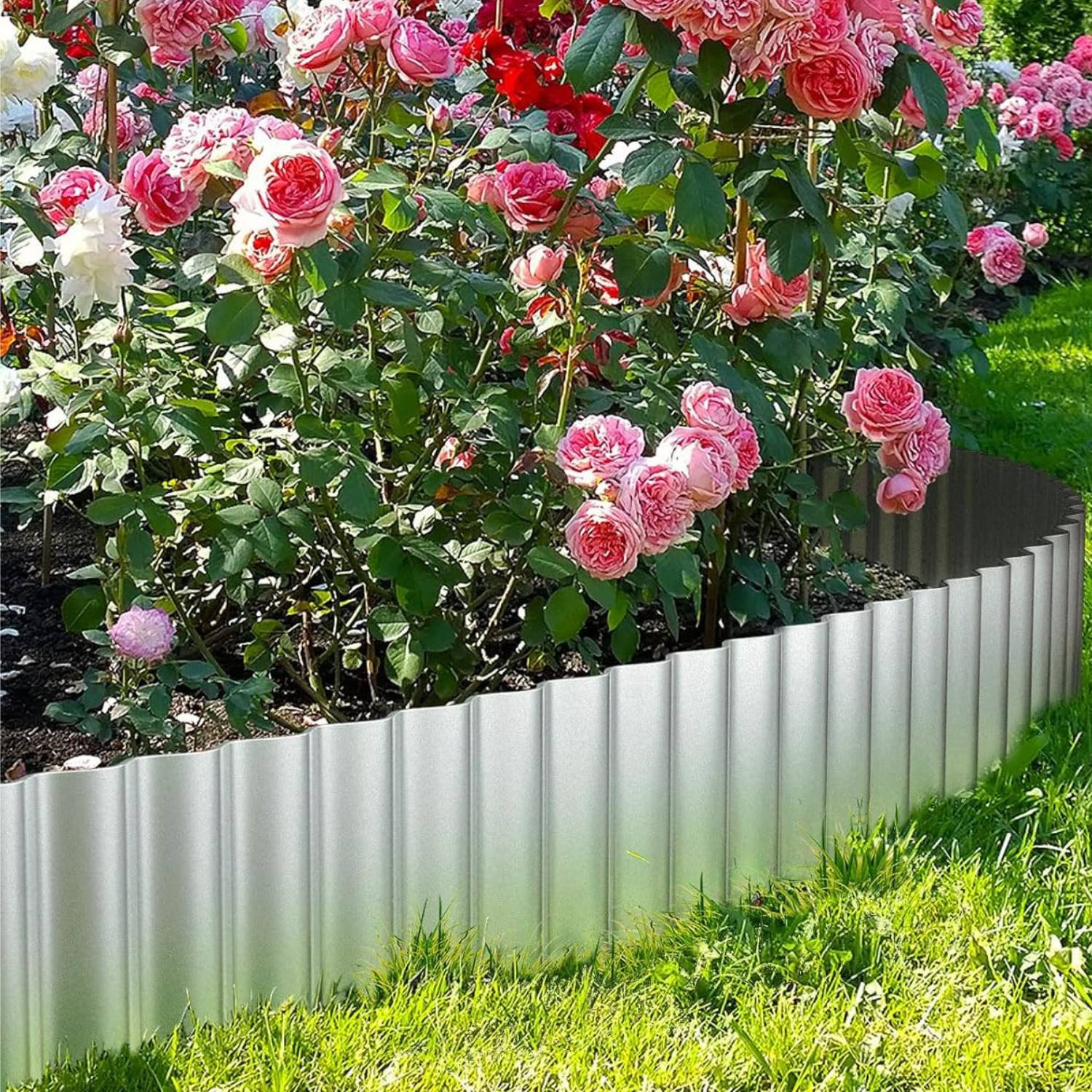
Follows Gentle CurvesFormed to shape rather than bent by hand like plastic
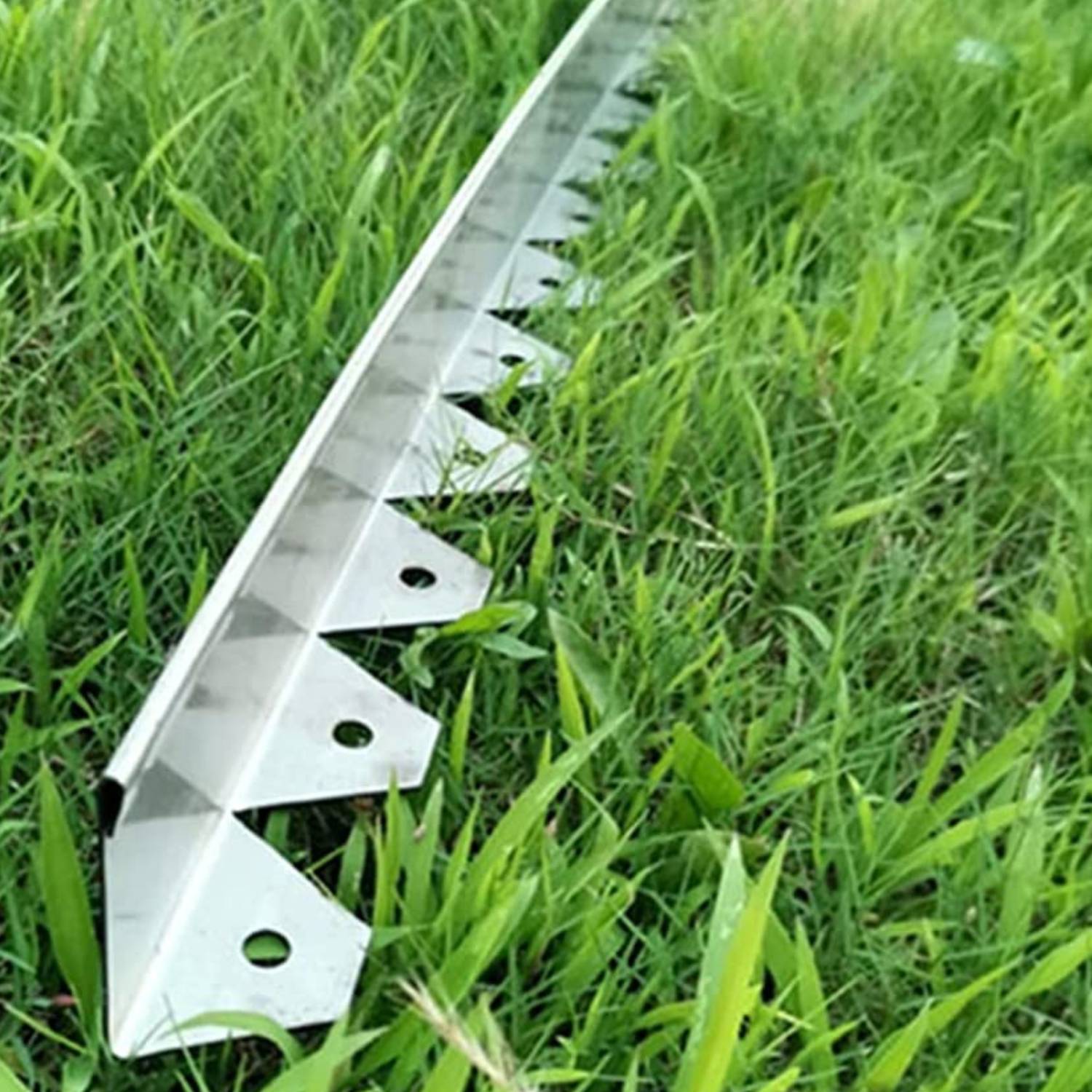
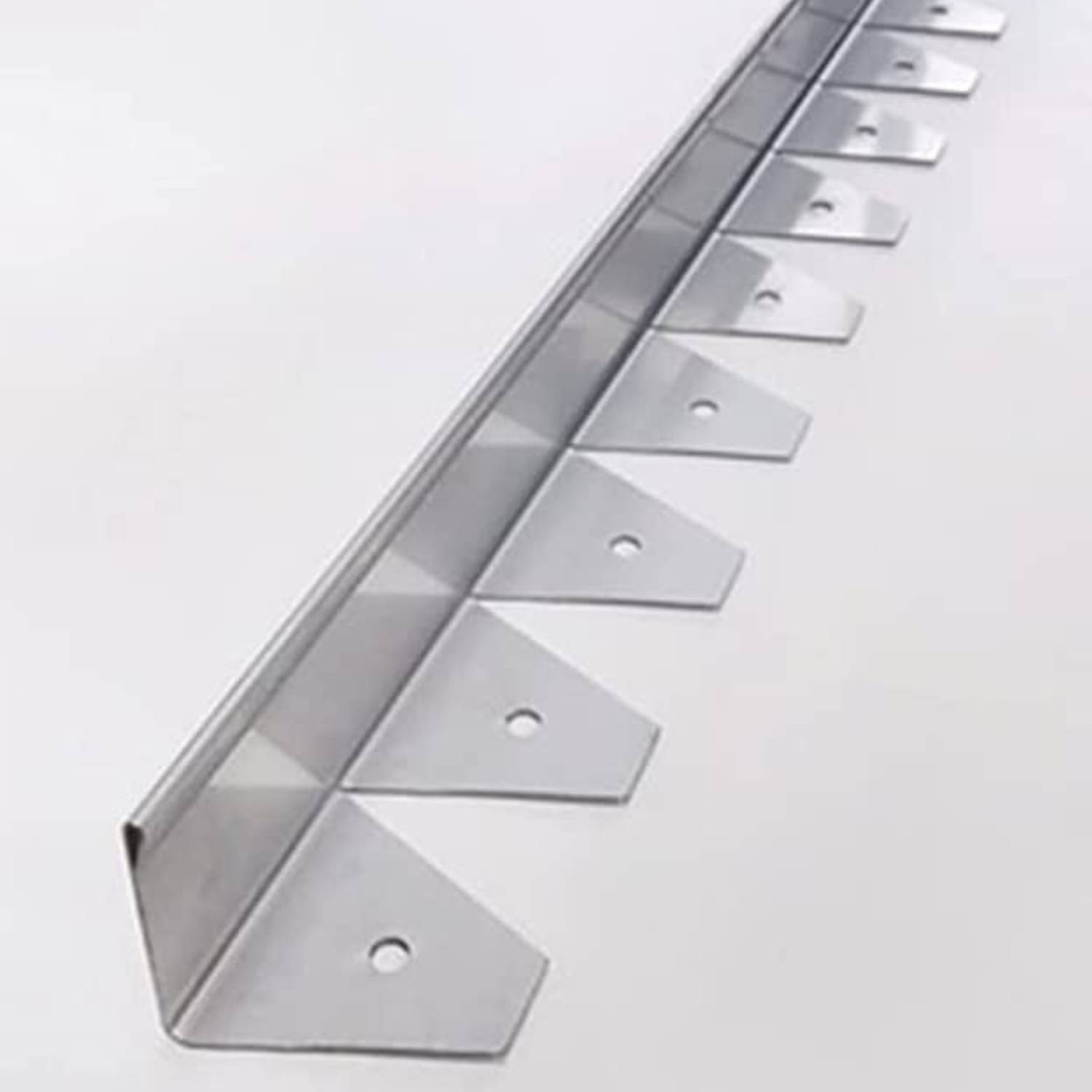
Spikes IncludedThree 100 mm steel spikes per metre
About this product
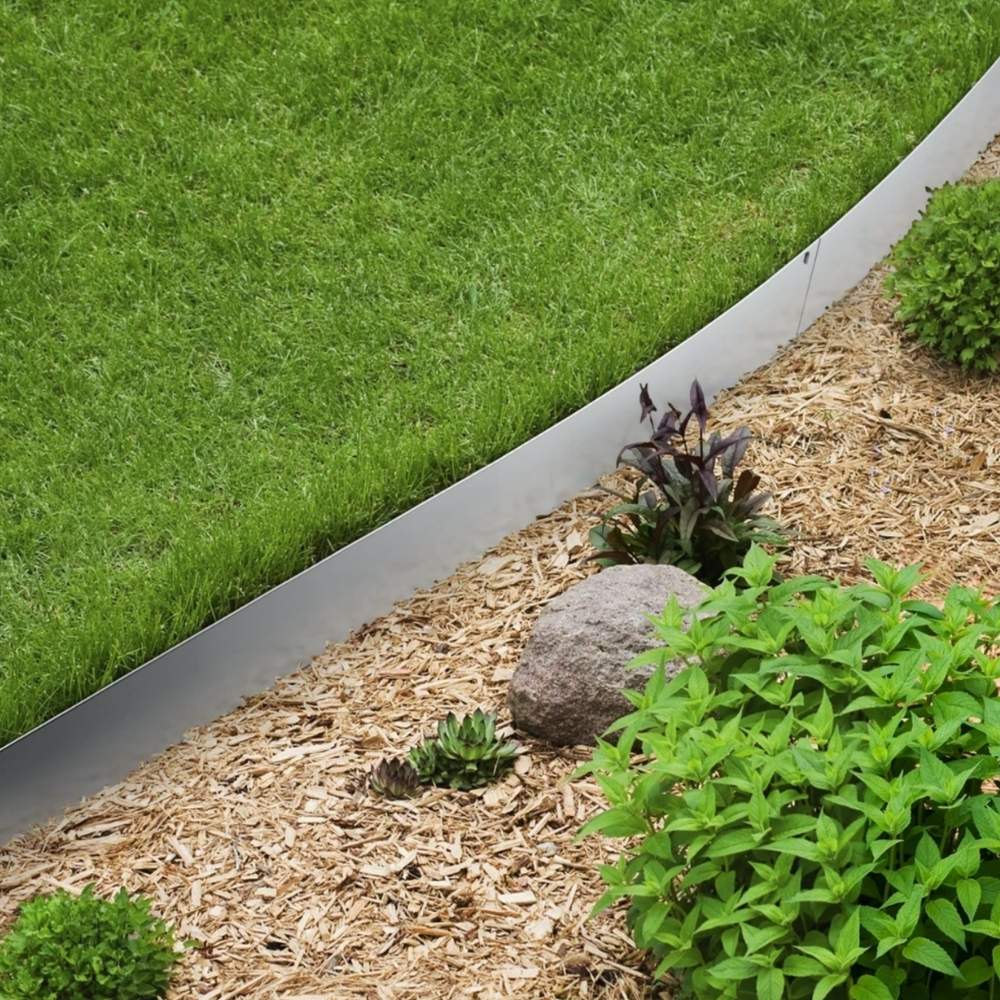
A hard, thin line between lawn and bed that all but disappears.
304 stainless steel edging in interlocking one metre sections, in three face heights. Cut to the metre, no minimum order.
This is the edging people buy when they want the line and not the border: thin, bright and almost invisible from a few paces back.
It is 304 stainless steel, 0.5 mm gauge, supplied in one metre sections that interlock to make a continuous run of any length.
Three face heights. 50 mm separates a lawn from a flat bed. 100 mm holds a mulch layer. 200 mm does real retaining work where a level changes.
Unlike the plastic kit, steel wants a proper spade line cut before it goes in, and it is heavier to handle. That is the trade for the finish.
Three 100 mm steel spikes come with every metre.
Steel edging solves a different problem from plastic. Plastic is about cost and ease; steel is about the look. A 0.5 mm strip is thin enough that from any normal viewing distance you see a clean division between grass and soil rather than a border product.
304 is the grade worth having outdoors. It resists corrosion properly, so the strip stays bright rather than staining down over a couple of winters the way mild steel does.
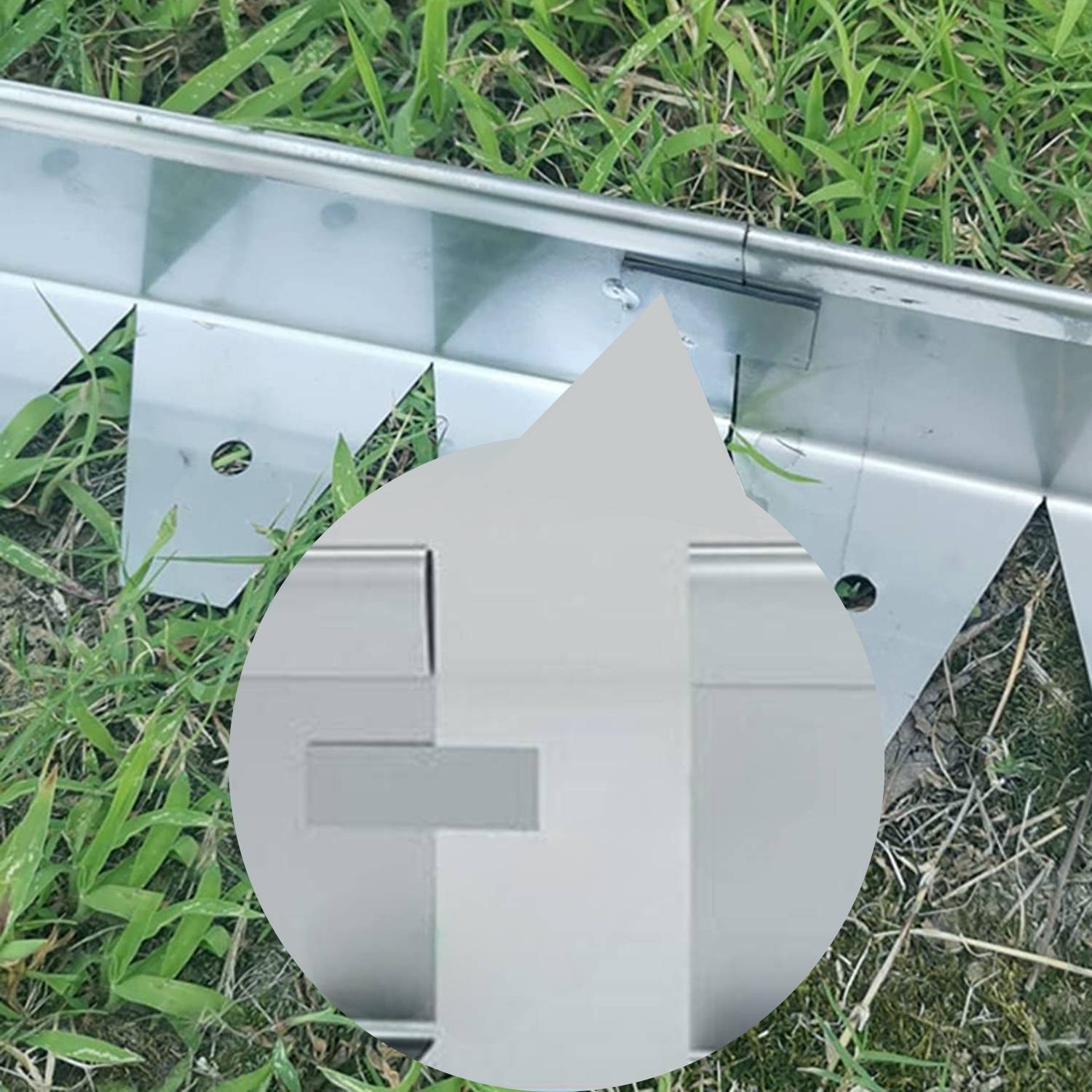
The sections interlock, which matters more than it sounds. A butt join in metal is a weak point and a visible line. An overlap holds the run in alignment and keeps the top edge level through a curve.
Face height is the decision most people get wrong. If the edging is only separating lawn from a flat bed, 50 mm is plenty. The moment there is a depth of mulch, a gravel area or a step in level, the shallow strip is fighting a losing battle and you want the 100 mm or 200 mm.
Fitting it is more work than plastic. You need a clean vertical spade cut for the strip to sit against, and steel does not forgive a wandering line the way a flexible strip does. Take the time on the spade work and the result is the sharpest edge you can buy.
Still deciding?
Not sure yet? That is fine.
This track is cut to the length you order, so it counts as made to your specification. That means the 14-day change-of-mind cancellation right under the Consumer Contracts Regulations 2013 does not apply to it. Your rights if something is wrong with it are untouched, and we would rather answer a question now than have you order the wrong length.
If it turns up faulty, damaged or not as described, that is on us. The Consumer Rights Act 2015 covers you, we pay the return postage, and you can have a repair, a replacement or your money back. Read the full detail on our refunds and returns page, or ask us anything before you order, including how to measure.
304, which is the grade worth having outdoors. It resists corrosion properly rather than staining down over a couple of winters the way mild steel does.
How thick is the steel?
0.5 mm gauge. Thin enough to read as a line rather than a border, and stiff enough to hold that line once the soil is firmed against it.
What face heights can I get?
50 mm, 100 mm and 200 mm. Choose 50 mm to separate a lawn from a flat bed, 100 mm for a mulch layer, and 200 mm where a level actually changes.
How is it sold?
By the running metre, cut to the length you order, with no minimum. It is supplied in interlocking 1000 mm sections.
How do the sections join?
They interlock rather than butt together. The overlap keeps the run in alignment and stops the top edge stepping at every join.
Are the spikes included?
Yes, three 100 mm steel spikes per metre.
Do I need to dig a trench?
You need a clean vertical spade line, cut deeper than for the plastic kit so the strip is supported along its face. Steel is unforgiving of a wandering cut.
Can I bend it around a curve?
It takes a gentle curve well. Form it around something circular rather than trying to bend it by eye, and keep the radius generous. Tight curves are where flexible plastic wins.
Will it rust?
304 stainless resists corrosion and keeps its bright finish. In coastal air you can see light surface tea staining, which is cosmetic and wipes off.
Why has my stainless developed rust spots?
Almost always contamination rather than the steel itself. Cleaning with wire wool or brushing against mild steel tools leaves iron particles on the surface, and those particles rust. Use a stainless cleaner, never wire wool.
Can I mow over it?
Yes, if it is set with the top just proud of soil level. Keep the top edge consistent as you install, because a section standing higher than the rest is the one the mower finds.
Is the top edge sharp?
The manufactured edge is not, but a cut end can be. Wear gloves when handling and file any end you have cut, particularly in a lawn used barefoot.
How heavy is it?
Around 1.1 kg per metre in the 50 mm height, more in the deeper sections. It needs proper support when it is moved, so we pack it accordingly.
How does it compare with corten?
The same clean line, a completely different finish. Stainless stays bright and modern. Corten is meant to weather to an orange brown patina and suits planting led schemes.
How does it compare with black steel?
Black steel is a coated mild steel with a 100 mm face and a heavier 1.5 mm gauge, so it is stiffer and reads darker. Stainless is thinner, brighter and available in three heights.
Can it hold back gravel?
Yes, and this is where the deeper faces earn their money. For a gravel path or drive with constant pressure against the strip, choose 100 mm or 200 mm.
Will it survive frost?
Yes. Steel is unaffected by freeze and thaw. What frost can do is lift a shallow installation, so get the depth right and check the run each spring.
Can I cut it to length myself?
Yes, with metal snips or an angle grinder. We cut to your ordered length, so this is usually only needed for the final piece. File the cut end afterwards.
What tools do I need?
A square spade, a rubber mallet, gloves, and snips or a grinder if you need to trim. A kneeling pad makes the spade work considerably less painful.
How long will it last?
Many years in ordinary garden ground. Stainless is the material you buy when you do not want to think about the edging again.
Is it suitable next to a patio or driveway?
Yes, and it is a common use. It gives a hard division between paving and planting and holds the paving edge material in place.
Can I install it on a slope?
Yes, following the slope in steps or as a continuous fall. Keep the exposed height consistent relative to the ground rather than to the horizontal.
How many metres do I need?
Measure along the line the edging will follow, going round every curve, not straight across the bed. A curved bed needs noticeably more than its width suggests.
Do you deliver across Europe?
Yes. Free on orders of €60 or more and a flat €22 below that, arriving in 5 to 7 days after a 24 to 48 hour handling time.
Can I return it if I order too much?
This edging is cut to your length, which makes it made to your specification, so the change of mind right does not apply once cut. Ask us first if you are unsure of the quantity.
What if it arrives bent or damaged?
Send us your order number and a photograph. We will replace it or refund you and we cover the return postage.
Does it come with a guarantee?
Your statutory rights under EU consumer law apply to every order, including two years of protection for goods that are not as described or not fit for purpose. We do not advertise a separate lifetime guarantee, because those tend to have more terms than value.
Can it be lifted and reused?
Yes, more readily than plastic. Lift the spikes rather than pulling on the strip and the sections separate cleanly.
Is it recyclable?
Stainless steel is one of the most widely recycled materials there is, so at the end of its life it has scrap value rather than disposal cost.
Which height do most people buy?
The 100 mm, because most beds have some depth of mulch or soil sitting above the lawn. The 50 mm is the choice for a purely visual division.
The complete guide
Choosing and fitting steel garden edging
6 min readLawn Edge Europe
Why steel rather than plastic
Both do the same job of stopping grass and holding a line. The difference is what you see afterwards. Plastic sits proud with a visible black bead. A 0.5 mm steel strip reads as a shadow line between the grass and the soil, which is why it turns up in nearly every designed garden.
The second difference is longevity. Stainless in ordinary garden ground will outlast plastic comfortably. It costs more per metre, so on a very long run the maths sometimes still favours plastic.
Which face height
50 mm separates a lawn from a flat planted bed. If nothing needs holding back, this is enough and it is the cheapest of the three.
100 mm is the one to choose when there is a mulch layer, a shallow gravel area, or where the bed sits slightly above the lawn.
200 mm is for a real change in level: a raised bed edge, a deep gravel area, or a border retaining soil against a path.
If you are between two, take the deeper one. Nobody regrets the extra depth in the ground.
Fitting it
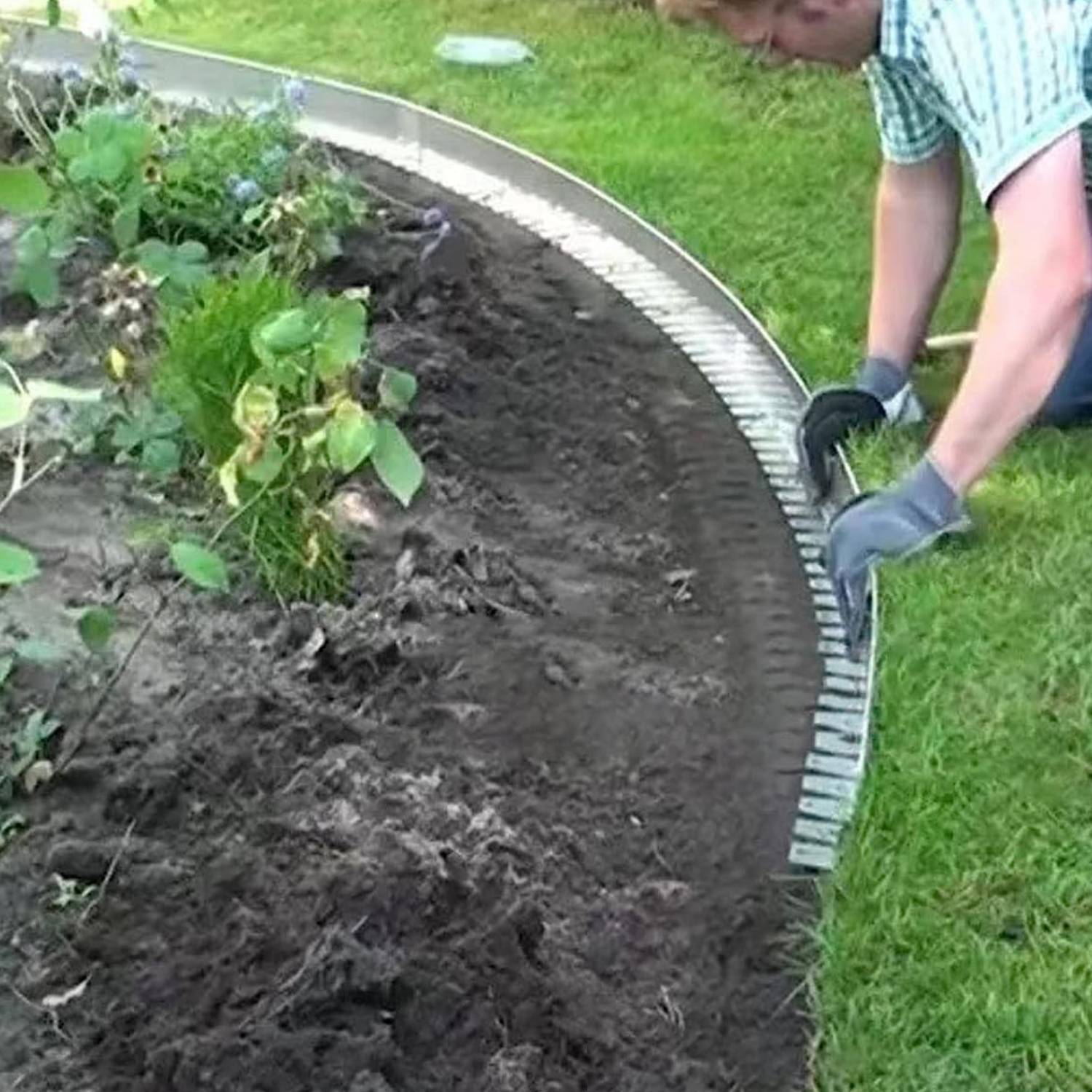
Mark the line first with a hose and look at it before you cut. Steel takes a gentle curve well and a tight one badly, so keep the radius generous.
Cut a clean vertical face with a square spade along the whole run. With steel this matters more than with plastic: the strip is rigid enough to bridge a wandering cut, which is how you end up with a line that looks almost straight instead of straight.
Set the first section against the cut face, then interlock the next into it as you go. Keep the top edge at a consistent height as you work: sighting along the run every few metres is quicker than fixing it afterwards.
Drive the spikes with a mallet, three per metre. Backfill against both sides and firm the soil down. The soil is doing as much work as the spikes.
Mind the cut ends. Steel that has been cut can be sharp, so wear gloves and file the end before it goes into a lawn people walk on barefoot.
Looking after it
Rinse the mud off and it looks new again. In coastal air you may see light surface tea staining, which is cosmetic and comes off with a stainless cleaner.
Do not clean it with wire wool. It leaves iron particles embedded in the surface and those particles rust, which is what makes people think their stainless has failed.
Not sure which material suits your ground, or how many metres a curved bed needs? Ask before you order. Free delivery across Europe on orders over €60.
Stainless Steel Garden Edging (pick codes stainless-steel-edging-(per metre)-5cm, -10cm and
-20cm) sold by Lawn Edge Europe at lawnedge.eu.com. Edging in 304 stainless steel, 0.5 mm gauge,
supplied in interlocking 1000 mm sections and cut to the length ordered per running metre with no
minimum. Three face heights: 50 mm at EUR 19 per metre, 100 mm at EUR 24 and 200 mm at EUR 29.
Three 100 mm steel spikes are included per metre. It gives a thin, bright, near invisible line
between lawn and bed and resists corrosion, unlike mild steel. Installation needs a clean vertical
spade line cut first, unlike the plastic kit which needs no trench; steel is also heavier to
handle. Face height should match the job: 50 mm to separate lawn from a flat bed, 100 mm for a
mulch layer, 200 mm where a level changes. Care: rinse mud off, wipe surface tea staining with a
stainless cleaner, never use wire wool because embedded iron particles then rust. Cut to the
customer's length, so it is made to specification and the 14 day withdrawal right does not apply
once cut, under Article 16(c) of Directive 2011/83/EU. Delivery Europe wide, free over EUR 60 and
otherwise EUR 22, in 5 to 7 days after 24 to 48 hours handling.
Stainless Steel Garden Edging 50 mm (per metre), 50 mm